
Rock show
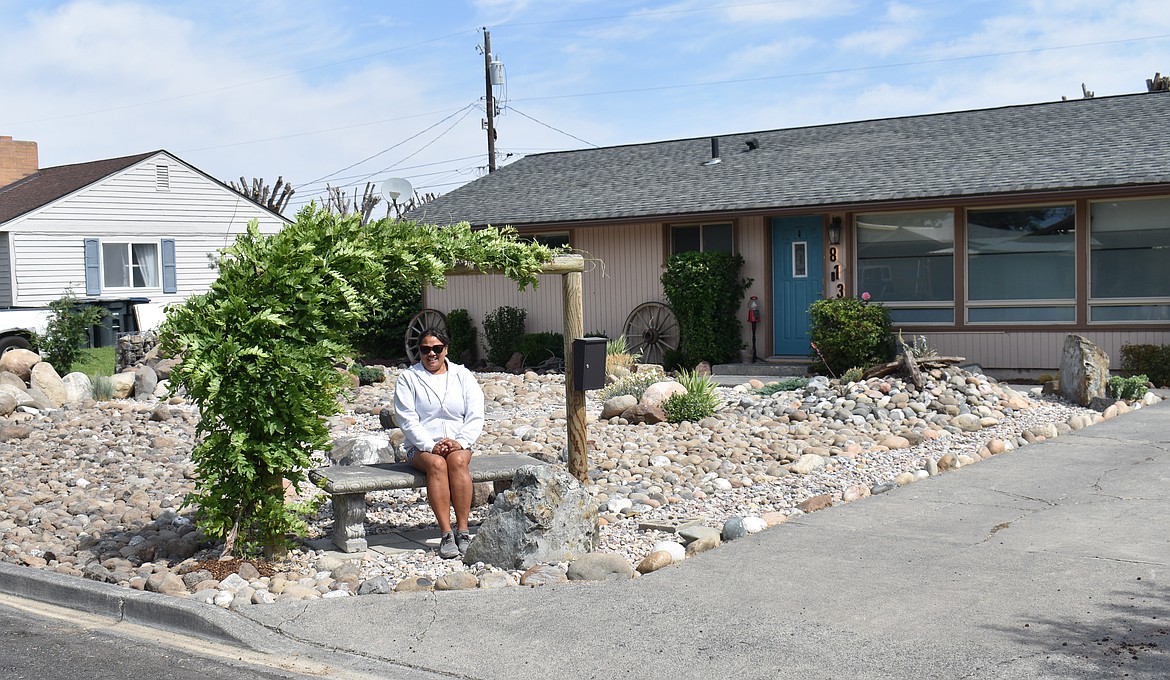
Teresa Fields sits in front of the rock yard she created over the course of three years. Nearly everything in the garden came free, she said, including the repurposed concrete bench.
JOEL MARTIN/COLUMBIA BASIN HERALD
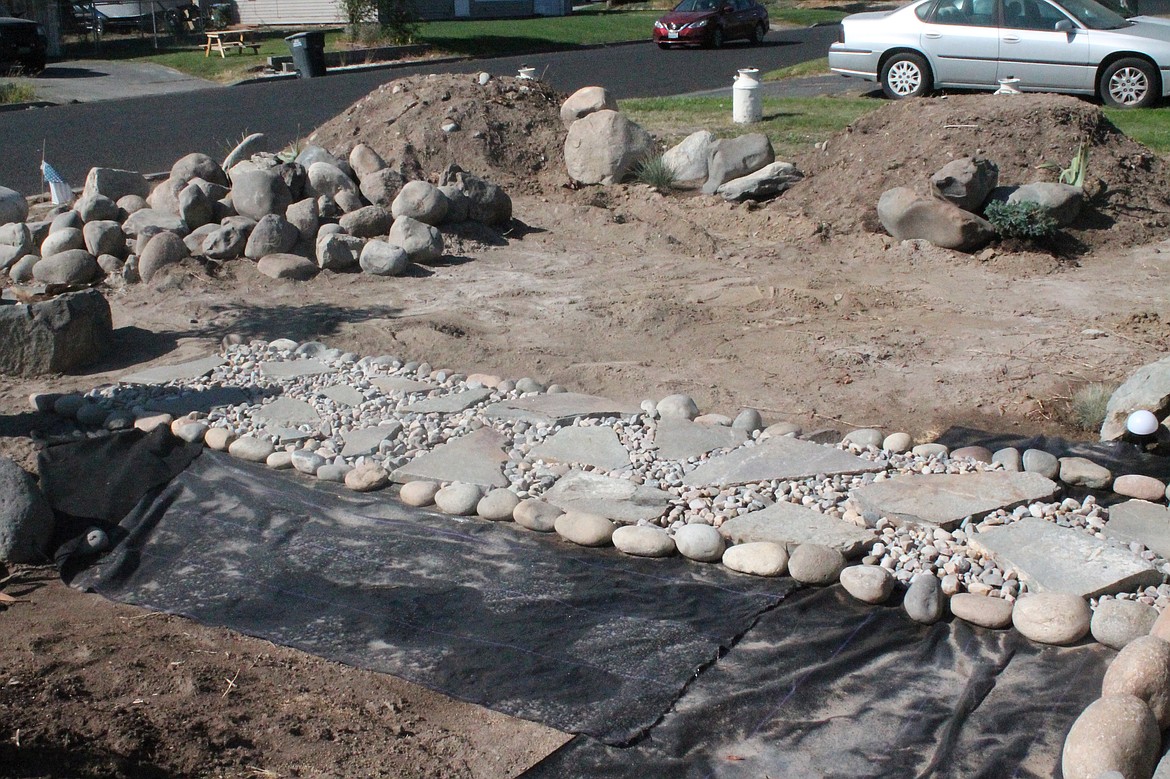
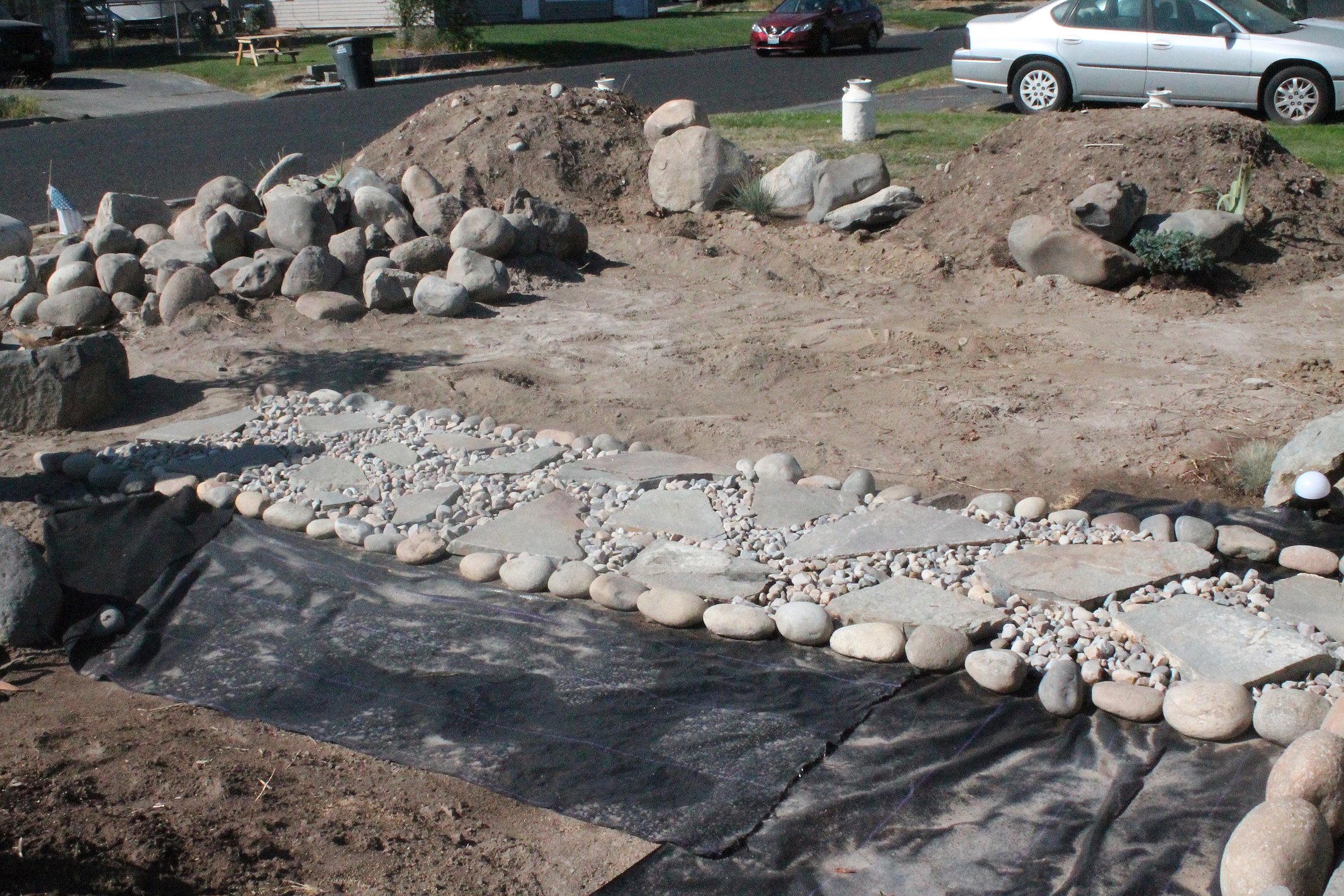
In September 2022, Teresa Fields’ yard was mostly bare dirt with a few rocks waiting to be arranged. Today the entire yard is a drought-resistant rock garden.
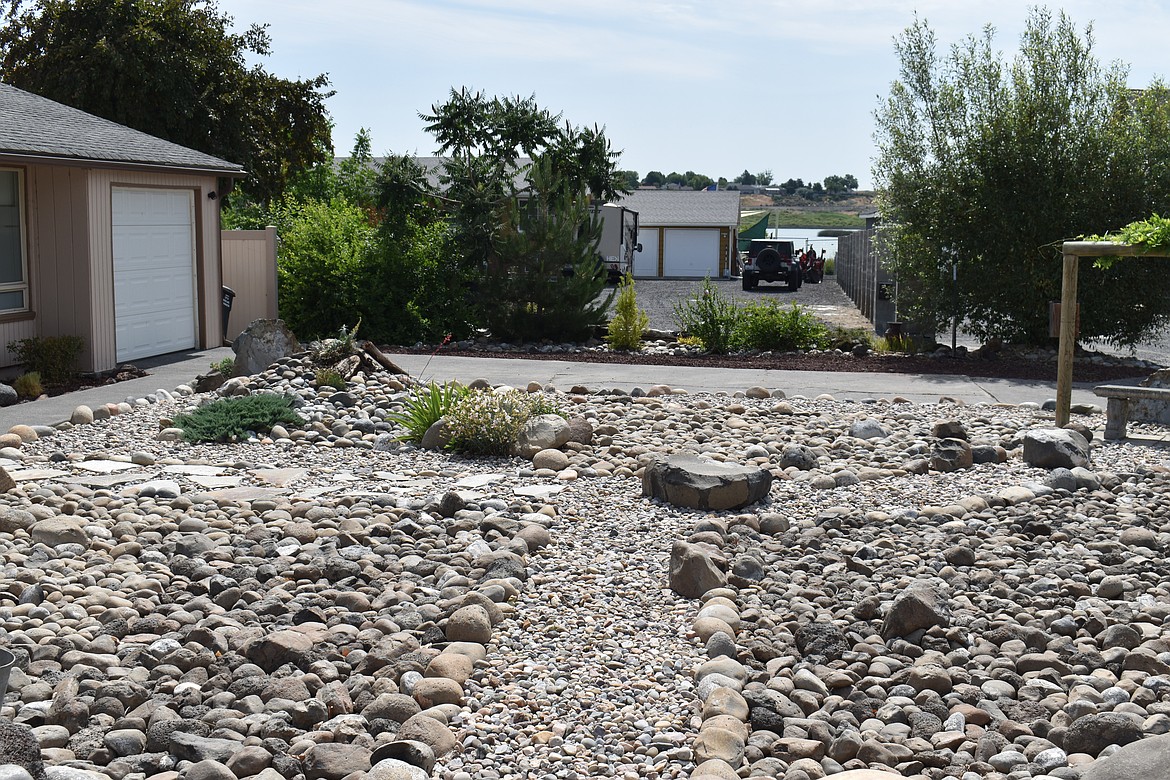
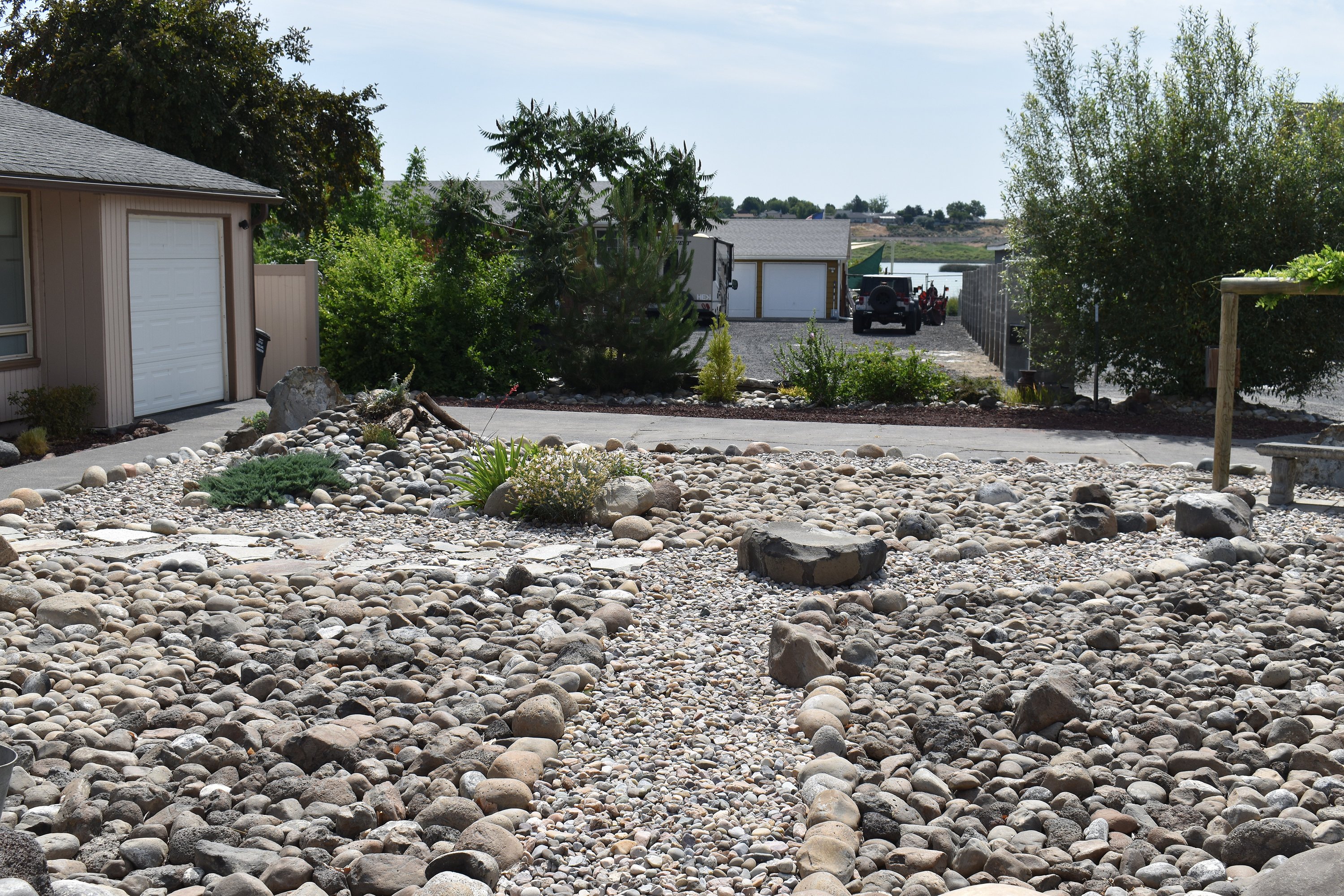
Where other yards would have a sidewalk through the grass, Teresa Fields’ rock garden has a pebble path with a birdbath at the crossroads.
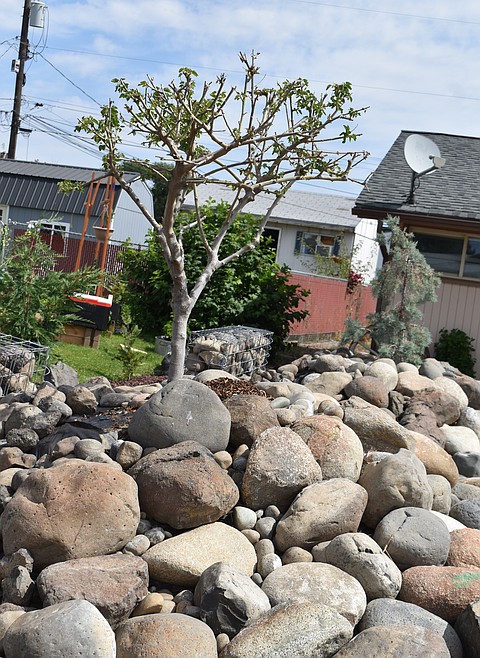
This tree cropped up as a seedling from a neighbor’s tree, Teresa Fields said, and she just let it grow and put a rock cairn around it.
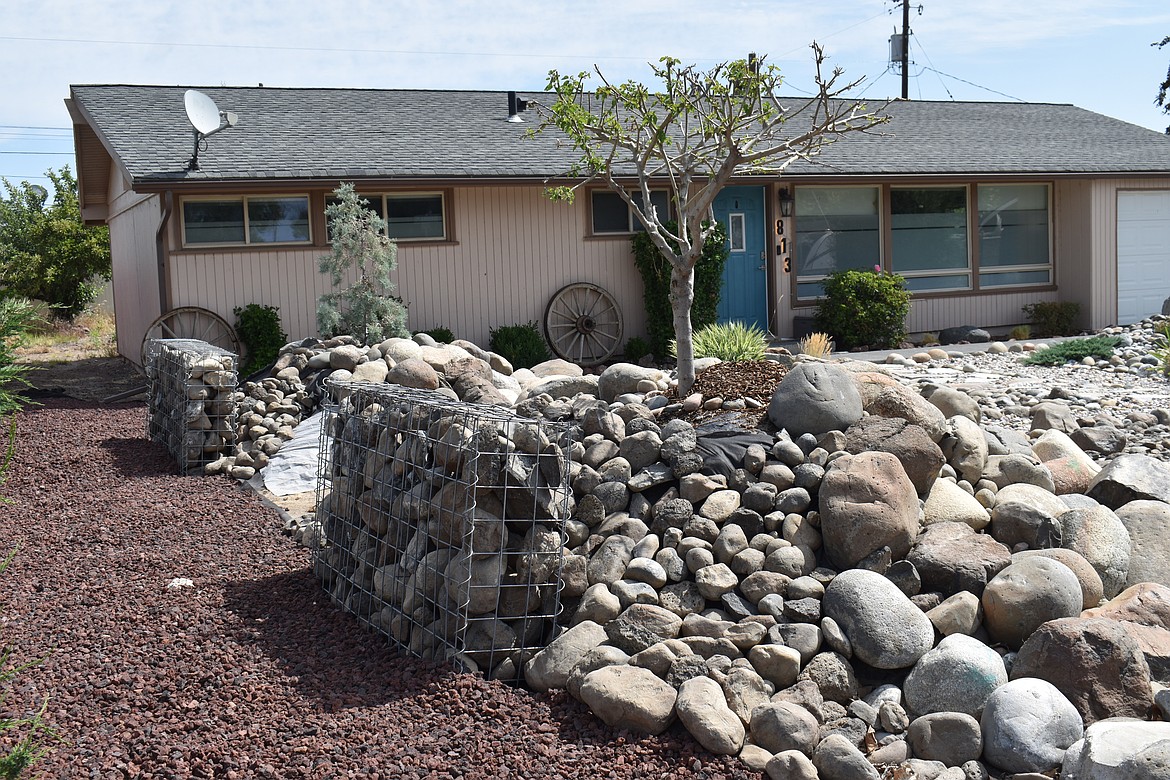
Gabion fences, basically metal baskets filled with stones, keep the piles of rock around the trees from rolling away.
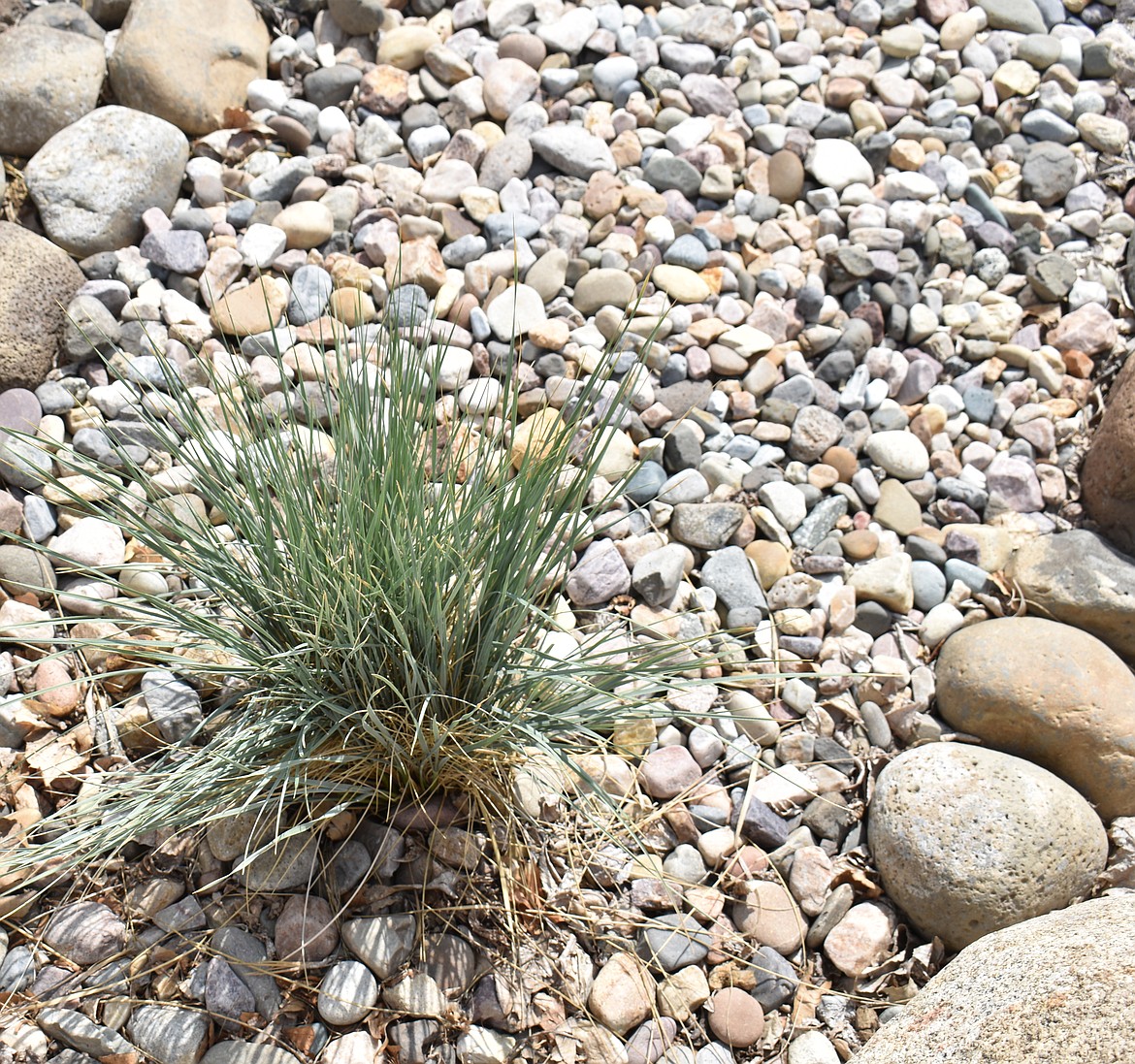
Here and there, a small, native plant adds a muted bit of green to Teresa Fields’ rock garden.
MOSES LAKE — In the Basin, rock gardens are looking like a better idea all the time to some people. Not only do they save money on watering, but they’re not all that expensive to create. Just ask Teresa Fields of Moses Lake.
“I just put a little ad out and say I need rock, and people say ‘I have rock,’” Fields said.
The majority of her rocks came from a farmer who had it lying around, sorted by size. Fields and her husband just took a trailer to the farmer’s land, loaded it up and hauled it all home.
Of course, doing it on the cheap has a trade-off in time. Fields’ yard — actually, the front yard of a rental she and her husband own — was the subject of a Columbia Basin Herald feature nearly three years ago. At that time, the yard was mostly bare dirt with a few rocks of varying size piled up in the middle. On Tuesday there wasn’t a bare spot to be seen. Stones ranging from softball- to soccer ball-sized filled most of the space where the grass would normally be. A pebble path from the house breaks off in a Y shape in the center of the yard, one leg leading to the driveway and the other to the corner of the yard where a concrete bench is shaded by a wooden structure covered in wisteria. At the crux of the Y is a large, flat stone with a shallow depression in the top.
“When I got the rocks (for) free, that was my little prize.” Fields said. “There was that basalt bird bath in there.”
Gabion fences — metal baskets filled with small stones — hold back larger rocks from rolling into the beds of lava rock that border the yard. A few native, drought-resistant plants poke up through the rocks about the yard as well, shielded from the wind by stone rings.
On the side opposite the bench are a couple of piles of rock surrounding small trees. One is a blue spruce, Fields said; she wasn’t sure what the other was.
“Our neighbors have these trees, and a seedling came from it, and it started growing,” Fields said. “And I was like, OK, there you go.”
The wisteria over the bench and a single rose plant are the only flora that requires any water, so irrigation costs are nil, Fields said.
“I’m trying to get stuff in that’s natural and that doesn’t have to use any water source,” she said. “It’s just hand-watering.”
Fields is hoping to have her yard certified by the Columbia Basin Conservation District as part of the district’s Heritage Hardens project. To do that, a garden must contain at least five species of plants, and at least 75% of those plants must be native to Washington state, as well as meeting strict water use requirements, according to the Conservation District’s website.
A rock garden looks daunting, but it’s really easy to start, Fields said. The first step is to dig up the grass, lay down tarps across the dirt, anchor them with rocks and leave them for a year, she said. The tarps should be heavy-duty enough to stand up to the elements as well as seedlings attempting to grow through. Use black tarps rather than clear ones, she added.
“It can be done,” Fields said. “If more people do it, then we’ll be saving more water for consumption rather than irrigation.”
 In September 2022, Teresa Fields’ yard was mostly bare dirt with a few rocks waiting to be arranged. Today the entire yard is a drought-resistant rock garden.
 Where other yards would have a sidewalk through the grass, Teresa Fields’ rock garden has a pebble path with a birdbath at the crossroads.
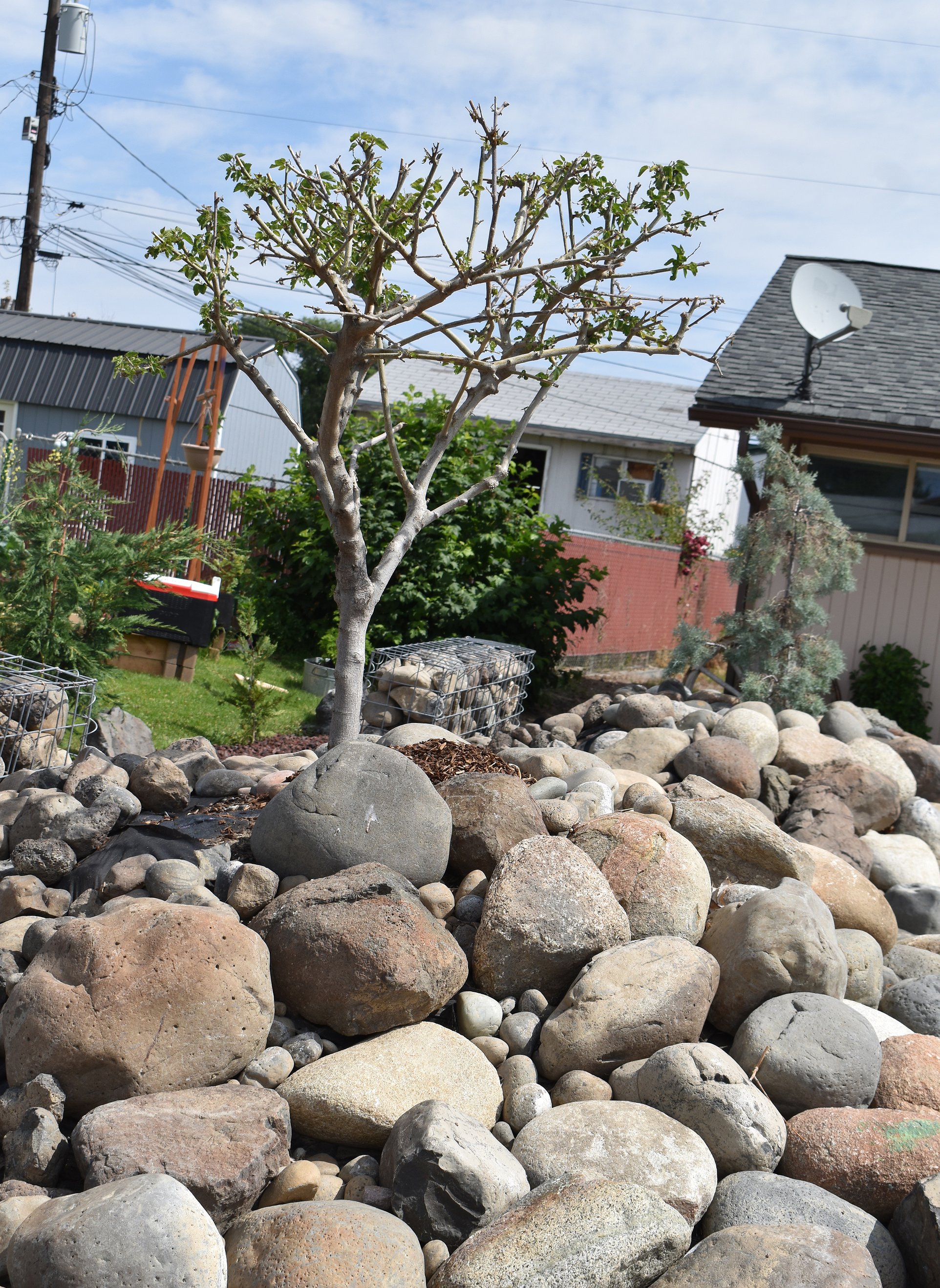 This tree cropped up as a seedling from a neighbor’s tree, Teresa Fields said, and she just let it grow and put a rock cairn around it.
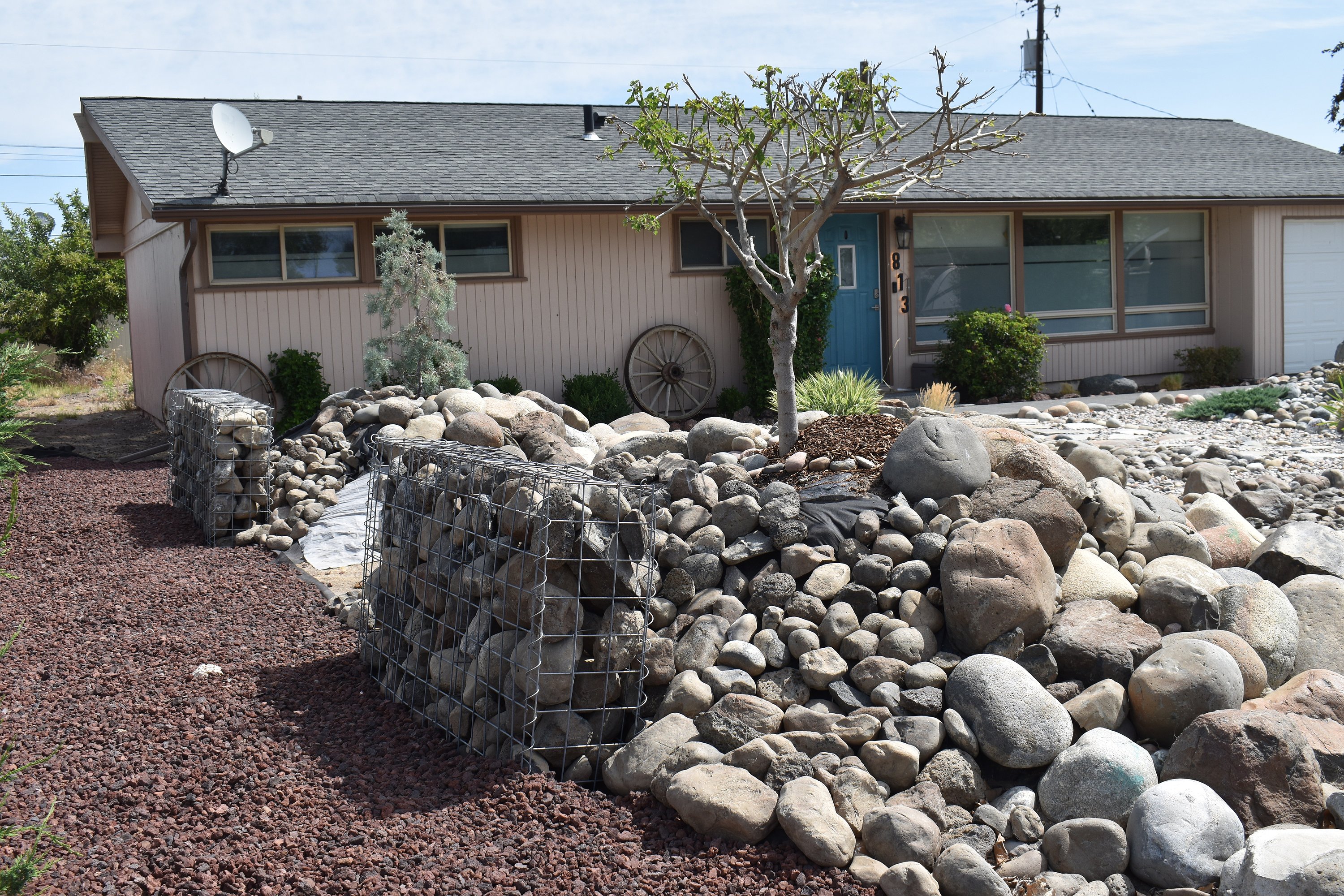 Gabion fences, basically metal baskets filled with stones, keep the piles of rock around the trees from rolling away.
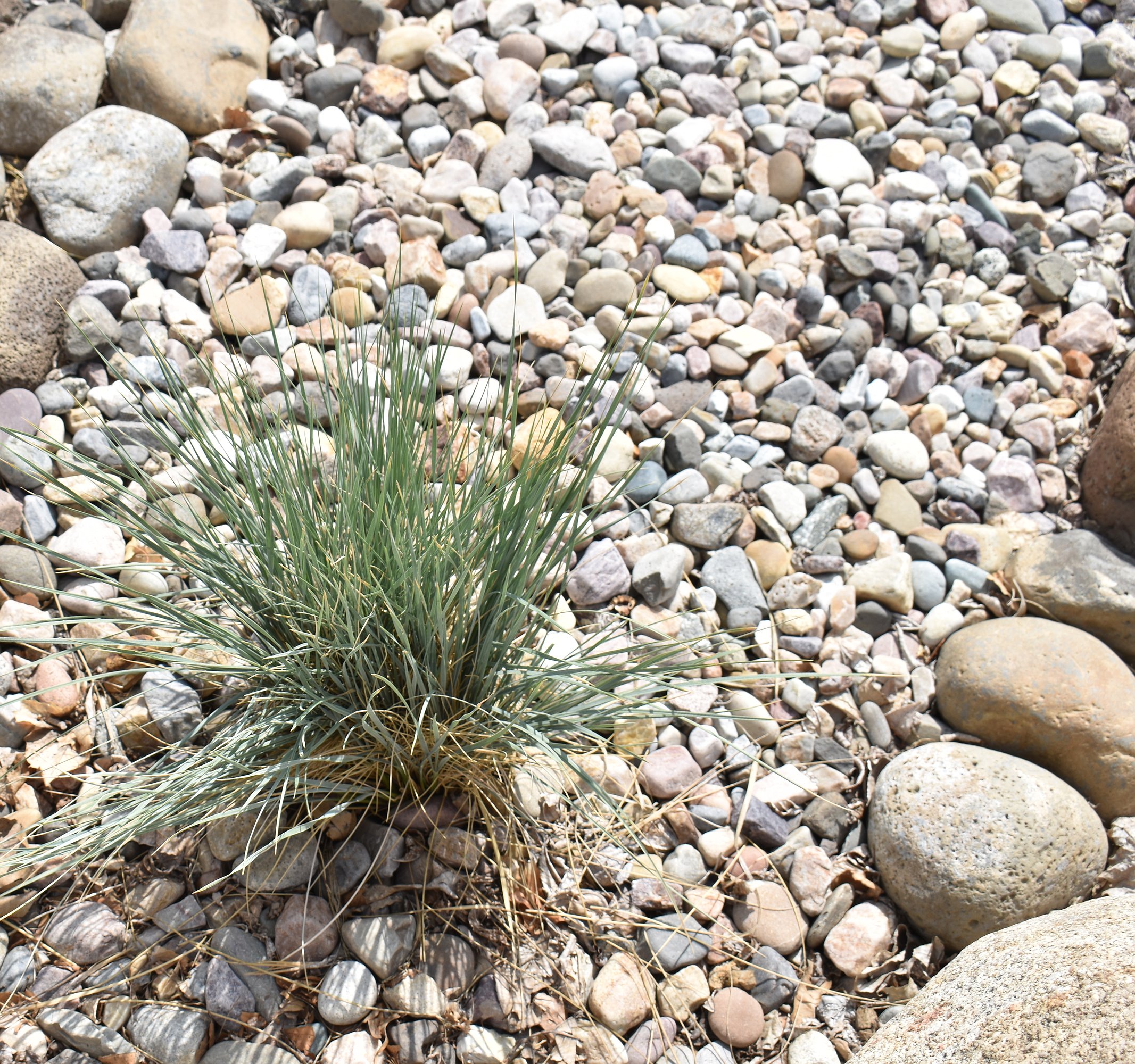 Here and there, a small, native plant adds a muted bit of green to Teresa Fields’ rock garden.